
How did we configure the machine?
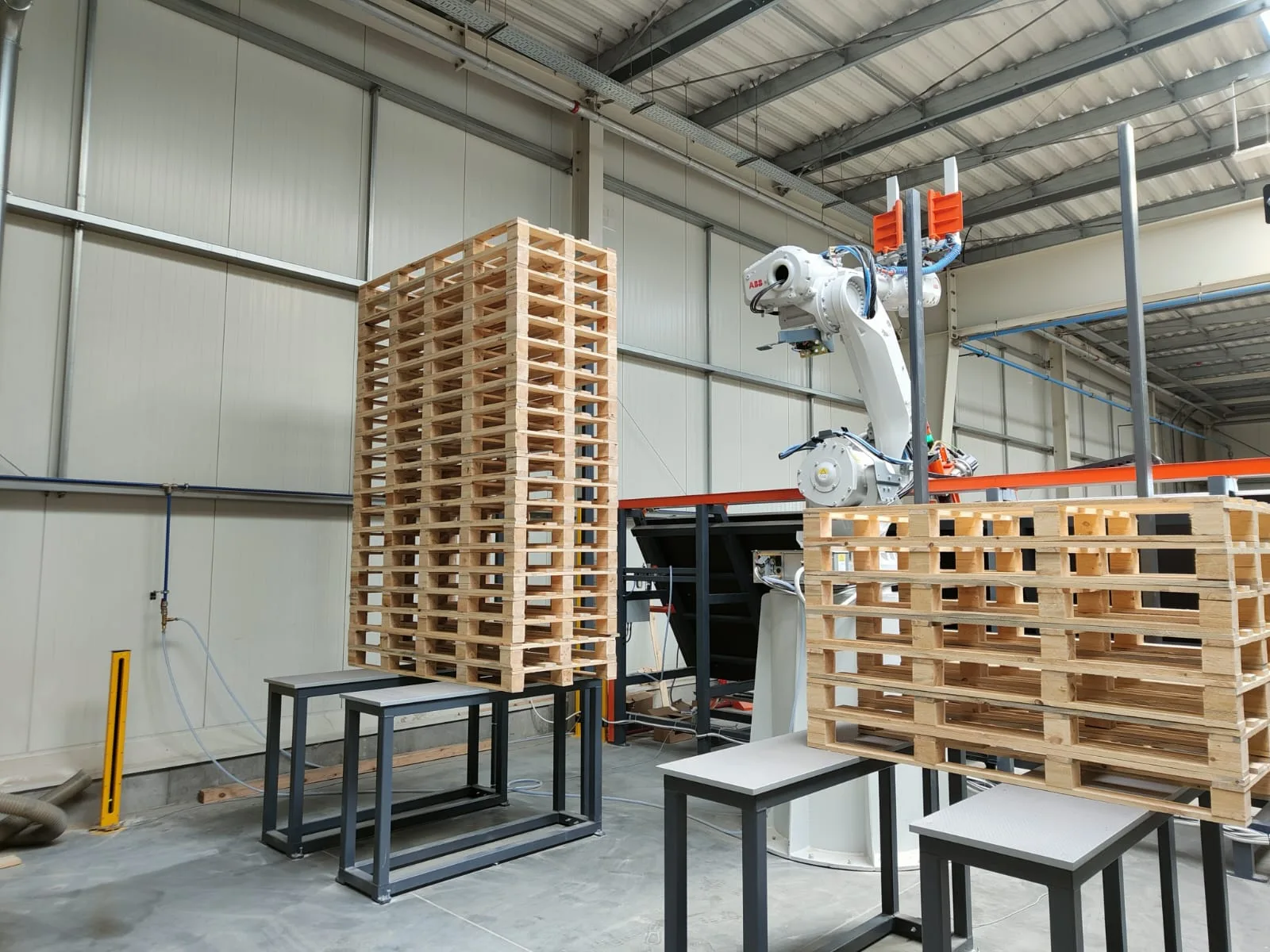
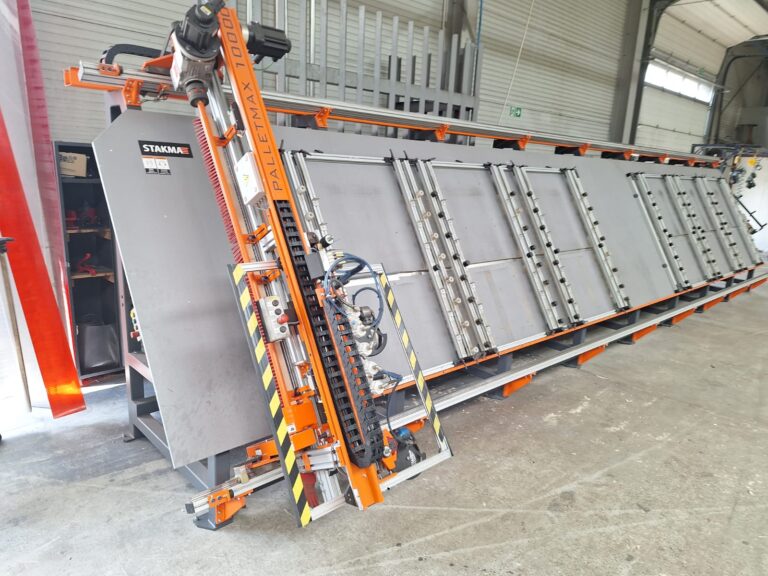
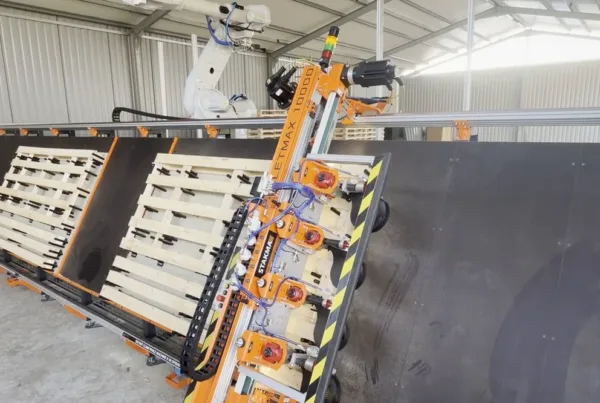
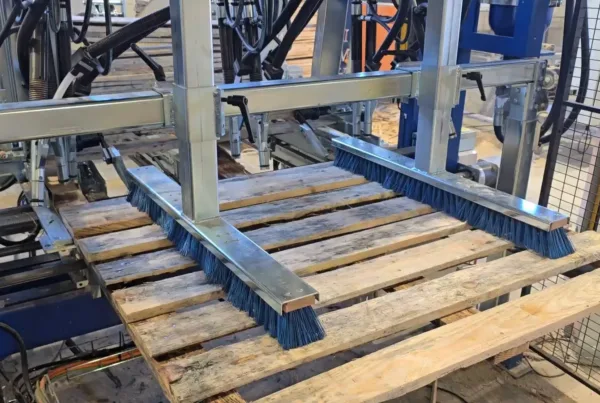
The Palletmax 6000 is a compact CNC automatic machine from the STAKMA Palletmax series. In this installation, it operates with 4 Bizon nailers. At the end of the machine, an ABB robot with a gripper handles both smaller and heavier pallet formats. We also equipped the machine with a chain feeder for finished components, which reduces the operator's workload when feeding material.
| Parameter | Value |
|---|---|
| Machine | Palletmax 6000 (STAKMA), CNC control |
| Nailers | 4 x Bizon |
| Outfeed of finished pallets | ABB robot with gripper |
| Component feeding | chain feeder |
| Jig change | 1-5 minutes (Palletmax series data) |
| Staffing | 1-2 operators (Palletmax series data) |
The entire Palletmax series features a 15-inch screen with simple operation, a system that counts used nails, and magazines for up to 1000 nails.
What changes in production?
- Short runs without wasted time: jig change in the Palletmax series takes a few minutes, making small orders profitable.
- No manual stacking at the end of the line: the ABB robot picks up finished pallets and stacks them, including heavier formats.
- Less work for feeding: the chain feeder delivers components, while the operator monitors the machine.
Before selecting a configuration, we calculate with the customer how many types of pallets they produce and in what batch sizes. This determines the number of nailers, the need for a robot, and the return on investment period.
Similar installations with a robot are described in our post Palletmax 7500 with robot.
Check if Palletmax suits your production →
Sources
- MDP Serwis, PalletMax series (STAKMA) product sheet: jig change, nail magazines, screen, operators required https://maszynydopalet.pl/maszyny/seriapalletmax/
The machine configuration is described based on an installation at a customer's site where we worked.
Step 1: Free initial consultation. We discuss your production: how many types of pallets you make, in what batch sizes, and who currently stacks the finished pallets.
Step 2: Technical visit. If the project makes sense, we visit your plant, inspect the hall, and together calculate whether the investment will be profitable.




Write a comment