
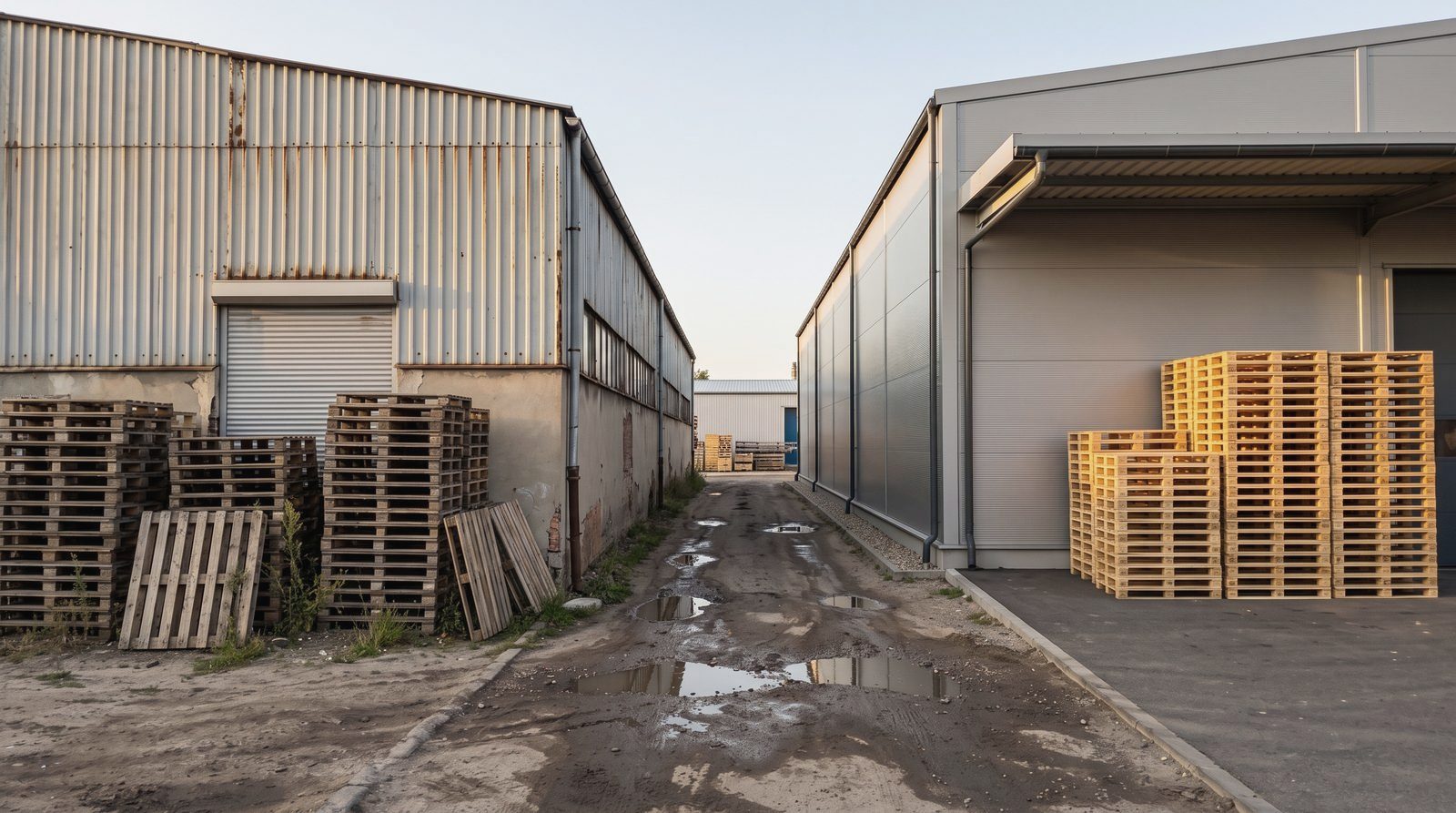
Why companies forego support
In discussions with clients, we most often hear one reason: concerns related to formalities and inspections. The plant owner has heard stories about complicated settlements, there is no one in the company to handle the documents, so they postpone the matter or purchase the machine without support. The second reason is that all forms of assistance are colloquially called 'grants', although they operate very differently and not all require a lot of work.
It is also worth knowing what an inspection looks for. In the Polish Investment Zone, for machinery, the primary checks are the date the machine was put into service and paid for, whether production on it has actually started, as well as the deadlines and criteria specified in the decision. All of this can be prepared in advance. In our projects, we have not encountered a situation where a client's support was withdrawn for a machine that was genuinely installed in the hall and is producing. This is our observation, not market statistics, which is why adhering to the terms of the decision is paramount.
Forms of support and how they differ
Beneath the word 'grant' lie four mechanisms. Each is obtained differently, and each is associated with a different obligation. Below, we describe them in turn, and their obligations are summarised in a table in the 'Obligations and risks' section, as this is where they are most useful.
Competitive grants require the most work: an application, competition for points, and settlement of the entire project in accordance with what was described in the application.
Tax exemption in the Polish Investment Zone does not require a competition. A company receives a support decision if it meets the criteria, and in return commits to specific expenditures and employment. In our experience with pallet production lines, this is usually the most advantageous path, which is why we base the examples and calculations below on it.
Robotics relief is a deduction in the annual tax return, without application and without competition: an additional 50% of the robot purchase costs is deducted from the tax base. According to current regulations, it covers costs until the end of 2026.
ZUS programmes support purchases that improve occupational safety and are effective for smaller investments: funding amounts to up to 80% of the project value, with a maximum of PLN 299,000 for investment activities.
Important: the absence of a competition or application does not mean an absence of obligations. For every form of support, documentation must be retained, and companies must be prepared for the possibility of inspections, including tax audits.
Two examples from our projects
The most important elements of this decision:
- 1. Scope of investment: the plant planned not only an IMH line for non-standard pallets worth EUR 1.2 million, but also the modernisation of the building and access roads. Thanks to this, one support decision covered the entire project, and not just the machine itself.
- 2. Choice of support form: a support decision in the Polish Investment Zone, i.e., income tax exemption without competition.
- 3. Financing: part of the investment financed by a loan and financial leasing. Tax exemption does not preclude such financing.
- 4. Formalities: preparing the documents took about a month. The most attention was required for monitoring deadlines and supplementary information.
- 5. Production output: approximately 1,400 non-standard pallets per day, consistently.
- 6. Financial effect: income tax exemption up to the limit from the regional aid map. In the Lower Silesian Voivodeship (outside Wrocław), this is 35% of eligible costs for a medium-sized company and 45% for a small one, provided that adequate income is generated and the conditions of the decision are met.
Asked later about that decision, the owner replies simply: it was a good one.
The plant includes an automatic board feeder for one of its production machines in its support decision. This is a good example that the Polish Investment Zone does not apply exclusively to entire lines: support can also cover a single device that improves existing production. A plant in Lubusz Voivodeship is following a similar path, having already submitted documents and will launch another line after the decision.
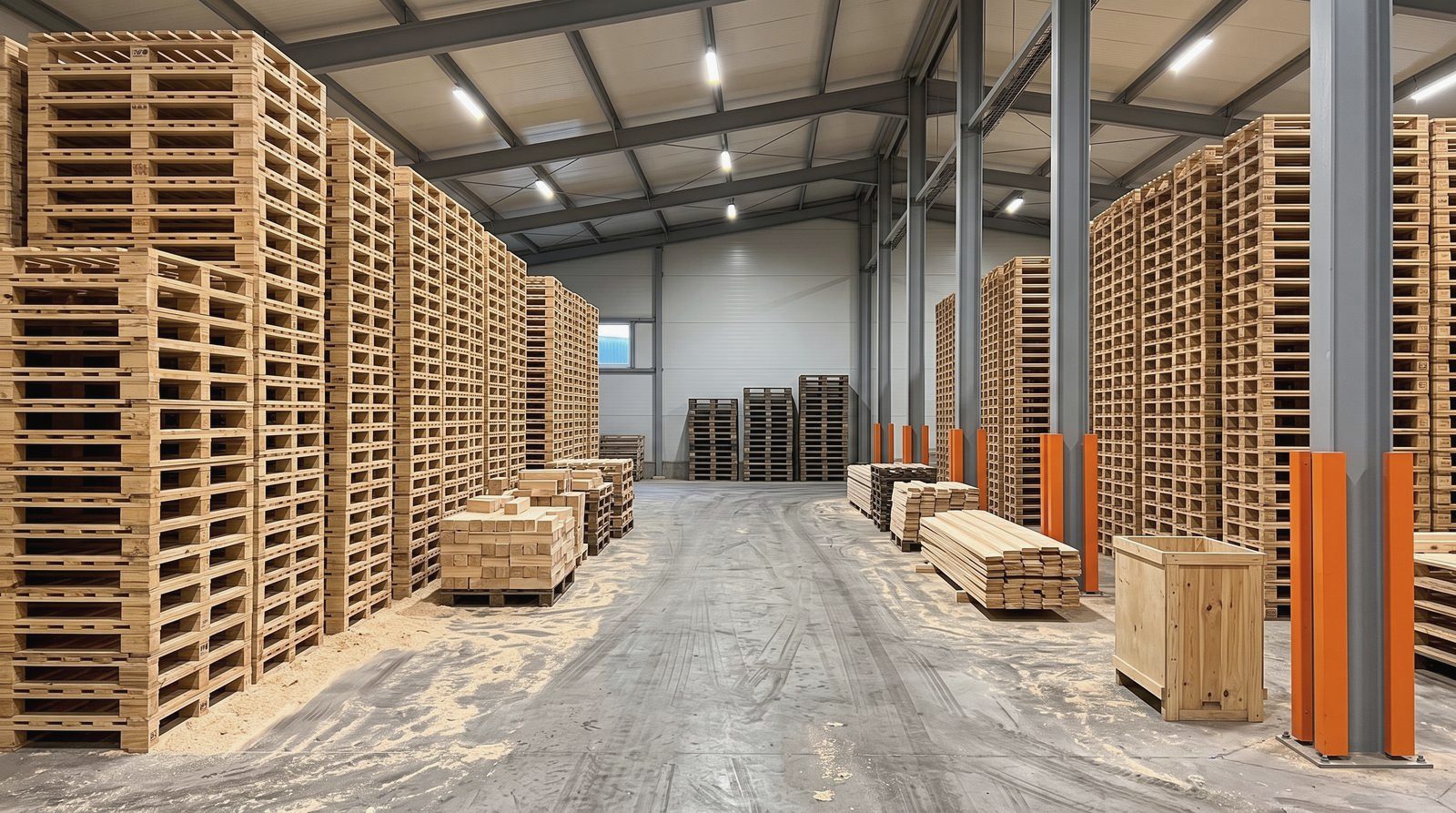
How much can be gained
The Polish Investment Zone now covers the entire country, so income tax exemption can be obtained for an investment in a hall where the company already operates. Minimum expenditures depend on the location and size of the company: in districts with the highest unemployment, it is PLN 0.2 million for micro-enterprises, PLN 0.5 million for small enterprises, and PLN 1 million for medium-sized enterprises. In other districts, the thresholds are higher, for example, for a medium-sized company, from PLN 1.5 million to PLN 10 million; therefore, before planning an investment, it is worth checking the threshold for your district. The same factors determine what portion of the investment can be recovered:
| Company size and region | Maximum aid intensity |
|---|---|
| Small company, Podkarpackie Voivodeship | up to 70% |
| Medium-sized company, West Pomeranian Voivodeship | approx. 50% |
| Medium-sized company, Greater Poland | approx. 35% |
According to the current regional aid map (PAIH handbook, 2025): a baseline of 50% e.g. in the Subcarpathian Voivodeship, 40% e.g. in the West Pomeranian Voivodeship, 25% in the Greater Poland and Lower Silesian Voivodeships (15% in specific urban centres and their subregions). Small and micro-enterprises receive an additional 20 percentage points, medium-sized enterprises 10.
The company does not receive a bank transfer. The benefit is that for the duration of the decision, it does not pay tax on income from the new investment: 12 years in Greater Poland and Lower Silesia, 14 years in most voivodeships, and 15 years in the east of the country and in special economic zones. The machine itself is financed normally, from own funds, credit, or financial leasing.
Model scenario (example figures, not specific to any company): a medium-sized company in western Poland buys a line for PLN 4 million. With a 35% aid intensity, the exemption pool is PLN 1.4 million. If the income from the new investment generates PLN 250,000 in corporate income tax annually, the entire pool will be used in approximately 5.6 years (PLN 1.4 million divided by PLN 250,000). Without a support decision, this amount would go to the tax office. This is how much foregoing support costs in this example: PLN 1.4 million is left on the table.
What this calculation does not account for: the exemption covers only income from the new investment, not the company's entire income; the amount of aid depends on the terms of the specific decision and the aid limit available in the region; the investment must meet the minimum expenditure threshold for the given district; and eligible income is calculated according to detailed rules. Therefore, treat this example as an illustration of magnitude, not a calculation for your company.
An analysis by PARP also shows that public investment support genuinely transforms companies. It compared enterprises that received grants from the Eastern Poland 2014-2020 programme with very similar companies that did not. Beneficiaries saw a clear increase in fixed assets, balance sheet total, and scale of operations (details in the sources at the end of the article).
Obligations and risks: when it might not pay off
A support decision also entails obligations. The company must incur the declared expenditures, maintain the promised employment, and retain the investment for three years (small and medium-sized enterprises) or five years (large enterprises). It is also important to remember that the exemption is worth as much tax as the company would actually pay on income from the new investment. A large pool does not mean cash in the bank.
Here are the obligations for each of the four forms of support we described earlier:
| Mechanism | How it is obtained | Main obligation |
|---|---|---|
| Competitive grants | Application and competition, competition for points | Settlement in detailed accordance with the project |
| CIT exemption in the Polish Investment Zone | Support decision, without competition | Adherence to declared expenditures, employment, and retention period |
| Robotisation relief | Without application, in the annual tax return | Correct deduction of eligible costs |
| ZUS programmes (occupational safety) | Application in ZUS competition and assessment | Project implementation within 3-6 months and acceptance by an expert |
When it is worth calculating carefully first
- When the investment is small, because for a small purchase, formalities may take more time than the benefit will bring.
- When the machine is needed immediately, for example, after a breakdown of the old one, and waiting for a decision would cost more than the future exemption.
- When the company has low income, because then it will only partially use the pool. It is better to first improve the margin, for example, by starting with errors that cause manual pallet production to lose money.
- When the company settles Estonian CIT or plans to switch to it, because as long as it benefits from an exemption based on a support decision in the Polish Investment Zone, this form of taxation is unavailable to it. For a large investment, it is worth comparing both options.
Sources
- Ministry of Funds and Regional Policy, “EU Grant Map: Purchase of machines and equipment for a modern pallet production line”, 2017 (grant PLN 600,000, 60% of eligible costs)
- CUPT, “Incentive effect as a condition for granting public aid”, 2023 (binding order for equipment as commencement of work)
- PAIH, “Investor support in the Polish Investment Zone”, 2025 (scope, new investment in an existing plant, decision period, aid intensity, minimum outlays, investment start, control)
- PARP, “Counterfactual analyses of the effects of the Eastern Poland Operational Programme 2014-2020”
- Corporate Income Tax Act, Art. 38eb (robotics relief)
- MDDP, “Estonian CIT versus support decision in the Polish Investment Zone” (interpretation of the Director of the National Tax Information)
- Regulation of the Council of Ministers on public aid granted to certain entrepreneurs for the implementation of new investments, Journal of Laws 2022 item 2861 (period of maintaining investment and jobs)
- ZUS, “Co-financing of payer's activities to improve occupational safety and health”, 2025
Cases of plants, document preparation time, reasons for foregoing support, and observations from the halls come from conversations with clients and projects we have worked on. Legal status as of 20 October 2026.
Disclaimer: we are not tax advisors or accountants, and this text is not tax advice. Before making a decision and calculating a specific exemption, consult a tax advisor or accountant.
We will select a machine or line for your production, provide a quotation, and show you when the investment can pay for itself. We have already walked this path with clients who purchased machines within the Polish Investment Zone.
Before the conversation, it is worth having two figures at hand: how much corporate income tax (CIT) the company paid last year and what budget you can allocate for the investment. Thanks to these, the first conversation will take fifteen minutes.





Write a comment